


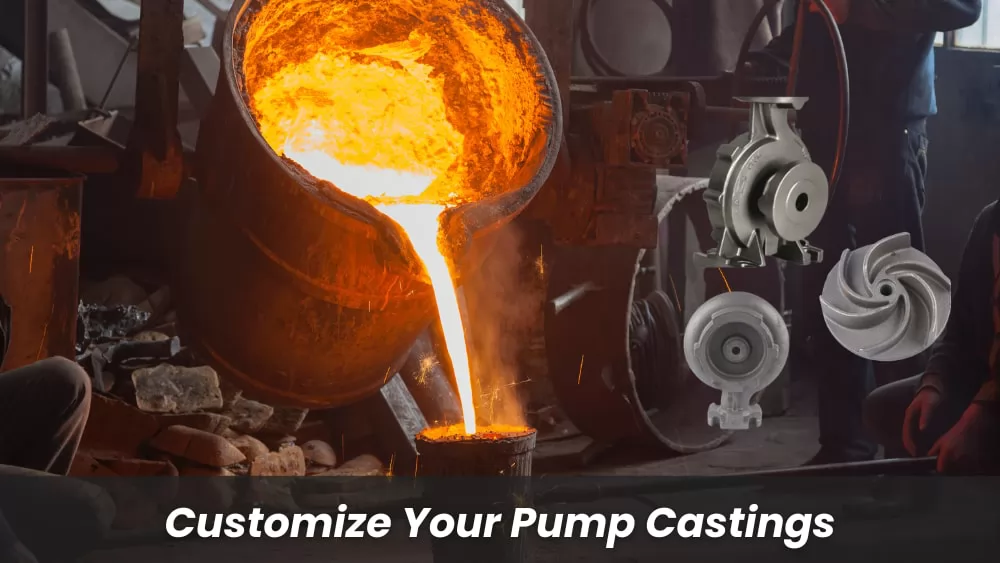
A pump is a mechanical device that moves fluids (liquids or gases, slurries.). If you are looking for a metal casting manufacturer to produce a wide range of pump castings for you. Then we are your best choice. We can produce any pump casting or cast pump part in our foundry. If you need help please contact us!
Article Contents
- When Should You Use Investment Casting for Pump Components?
- What Types of Pump Components Can Be Made with Investment Casting?
- What Are the Advantages of Investment Casting for Pump Parts?
- What Materials Are Commonly Used in Investment Casting for Pump Components?
- What Size and Weight Limits Apply to Investment Cast Pump Parts?
- What Surface Finish and Dimensional Tolerances Can Investment Casting Achieve?
- Can Complex Internal Passages or Thin Walls Be Cast Using Investment Casting?
- How Is Porosity Controlled in Investment Cast Pump Parts?
- What's the Difference Between Investment Casting and Sand Casting for Pump Components?
- What Quality Inspections and Tests Are Performed on Pump Castings?
- What Certifications Should an Investment Casting Foundry Have for Pump Applications?
- How Do You Prevent Casting Defects in Pump Impellers and Housings?
- Which Industries Use Investment Cast Pump Components Most Often?
- Are Investment Cast Pump Parts Suitable for High-Pressure or Corrosive Environments?
- Can Investment Casting Be Used for Replacement or Aftermarket Pump Parts?
- Video of the Process of Producing Water Pump Castings
- Our Customized Pump Casting Products
- Your Trusted Pump Casting Manufacturer
When Should You Use Investment Casting for Pump Components?
The honest answer is: it depends on what you're trying to make and how many you need. Investment casting makes the most sense when your pump part has complex geometry — tight internal passages, curved vanes, thin walls, or irregular shapes that would be difficult or expensive to machine from solid stock.
It's also the right call when surface finish and dimensional accuracy matter out of the mold. If you're producing impellers, volute casings, or valve bodies that need to be near-net-shape with minimal post-machining, investment casting can get you there in a way that sand casting simply can't.
As a rough guide, investment casting tends to be the most cost-effective route when:
- Annual volumes are somewhere between 500 and 50,000+ pieces
- Part weight is under 50kg (though larger is possible)
- You need wall thicknesses as thin as 1.5mm to 2mm
- Tolerances required are in the range of CT4 to CT6 (ISO 8062)
For simple, blocky parts with no complex geometry, sand casting or forging might be cheaper. But the moment a part has undercuts, internal channels, or a surface that needs to look good without grinding, investment casting becomes the obvious choice.
What Types of Pump Components Can Be Made with Investment Casting?
Quite a wide range, actually. Most people think of investment casting as being limited to small, intricate parts — but modern foundries routinely cast pump components up to 30–50kg with high complexity. Here's what gets made most often:
- Impellers — open, semi-open, and closed types; including multi-vane designs with tight internal channels
- Pump casings and volute housings — complex curved internal geometry that would be extremely difficult to machine
- Wear rings and wear plates — close tolerance, often in hard alloys
- Pump shafts and shaft sleeves — where material properties and concentricity matter
- Diffusers and guide vanes — precise aerofoil/hydrofoil profiles
- Suction covers and back plates
- Mechanical seal housings
- Bearing brackets and supports
Investment casting is particularly well-suited to parts in corrosion-resistant alloys — duplex stainless, super duplex, Hastelloy, Inconel — where machining from bar stock would be both wasteful and expensive. If your pump is handling seawater, acids, or slurries, the material options available through investment casting are a real advantage.
What Are the Advantages of Investment Casting for Pump Parts?
There are a few reasons this process has been the go-to for precision pump components for decades. It's not just about aesthetics — the advantages are pretty practical:
- Near-net-shape output — typical material removal after casting is only 10–20% compared to 40–60% when machining from solid. That translates directly into material cost savings, especially for expensive alloys.
- Surface finish straight from the mold — Ra values of 1.6 to 6.3 μm are achievable without additional grinding, which matters for hydraulic efficiency in pump internals.
- Tight dimensional tolerances — linear tolerances of ±0.1mm to ±0.25mm per 25mm are routinely held on investment castings.
- Design freedom — undercuts, internal passages, complex curves — features that are impossible to sand cast cleanly and prohibitively expensive to machine.
- Material versatility — virtually any castable alloy works: carbon steel, stainless, duplex, nickel alloys, cobalt alloys.
- Consistency at volume — once the tooling is proven, part-to-part variation is very low, which matters when you're producing replacement parts that need to fit existing assemblies.
The tradeoff is upfront tooling cost and longer lead times compared to sand casting. But over a production run of a few hundred to a few thousand pieces, the per-part economics usually favor investment casting clearly.
What Materials Are Commonly Used in Investment Casting for Pump Components?
The short answer: almost any metal that can be melted and poured. In practice, the choice comes down to what fluid the pump is handling and what mechanical demands it faces. Here's what gets specified most often in pump applications:
- Carbon Steel (e.g., WCB, WCC) — the workhorse for general-purpose pumps handling water, oil, and non-corrosive fluids. Good strength, weldable, cost-effective.
- 316 / 316L Stainless Steel — standard choice for corrosive media. The molybdenum content gives it better resistance than 304 in chloride environments. Most commonly specified for chemical and marine pump applications.
- Duplex Stainless (e.g., 2205, 2507) — when you need both corrosion resistance and high strength. Super duplex (2507) handles seawater and aggressive acids where 316 would corrode too quickly. Yield strength roughly 2× that of standard austenitic stainless.
- Hastelloy C-276 / C-22 — for highly aggressive chemical service: sulfuric acid, hydrochloric acid, oxidizing environments. Expensive but often the only option.
- Inconel 625 / 718 — high-temperature service, often in oil & gas and power generation pumps.
- Cobalt-base alloys (e.g., Stellite) — extreme wear resistance for abrasive slurry applications.
- Bronze / Aluminum Bronze — still used in certain seawater and marine applications for its natural corrosion resistance and anti-galling properties.
If you're not sure which alloy fits your application, the fluid's pH, temperature, chloride content, and whether it carries solid particles are the four things a foundry will ask about first.
What Size and Weight Limits Apply to Investment Cast Pump Parts?
Investment casting isn't limited to tiny parts, but there are practical constraints. Most investment casting foundries work comfortably in these ranges:
- Part weight: from a few grams up to 50kg for most facilities; specialist foundries can go up to 150kg+
- Overall envelope: typically up to 600mm × 600mm in plan; larger is possible with tree-less or block casting approaches
- Wall thickness: minimum around 1.5mm to 2mm for steel; thinner is possible in aluminum
- Maximum wall thickness: generally under 75–100mm to avoid shrinkage issues, though this depends heavily on alloy and geometry
For pump impellers specifically, diameters up to 400–500mm are commonly investment cast. Beyond that, sand casting or fabrication tends to take over. If your part is borderline, a good foundry will tell you upfront whether investment casting is feasible — or whether you'd be better off with a different process for that particular geometry.
What Surface Finish and Dimensional Tolerances Can Investment Casting Achieve?
This is one of the strongest arguments for investment casting over other casting methods. Here's what you can realistically expect:
- Surface roughness (Ra): typically 1.6 to 6.3 μm as-cast, depending on alloy and part geometry. Compare that to sand casting, which typically delivers 12.5 to 25 μm.
- Dimensional tolerance: per ISO 8062, investment castings routinely hit CT4 to CT6. In practical terms, that means about ±0.1mm on a 25mm dimension scaling up to roughly ±0.5mm on a 250mm dimension.
- Flatness and straightness: typically held to 0.5mm per 100mm on critical reference surfaces
For pump applications where hydraulic clearances are tight — say, the gap between an impeller and wear ring — these tolerances often mean the casting can go straight to final inspection without an intermediate grinding operation. That's a real time and cost saving in production.
That said, if your drawing calls for tolerances tighter than CT4, or surface finishes below Ra 1.6 μm, those features will need post-cast machining. A well-run foundry will flag those features at the DFM (design for manufacturability) stage before tooling is cut.
Can Complex Internal Passages or Thin Walls Be Cast Using Investment Casting?
Yes — and this is genuinely one of the process's strongest suits for pump applications. Internal passages, undercuts, and thin-wall sections that would be impossible to achieve in sand casting are routine in investment casting.
For internal passages (like the channels inside a multi-stage pump casing), ceramic cores are placed inside the wax die before injection. The wax forms around the core, and after casting, the ceramic core is chemically leached out, leaving the internal cavity. Wall thicknesses as thin as 1.5mm are achievable in steel, and internal passage diameters down to 3–4mm are routinely produced.
For thin-wall impellers with open vanes, the ceramic shell process holds fine detail very well — vane profiles, leading edge radii, and surface contour are reproduced from the wax pattern with very high fidelity. The key design constraint is ensuring there's enough metal feed path to fill thin sections before the metal solidifies. A good foundry will simulate this with casting simulation software before committing to tooling.
How Is Porosity Controlled in Investment Cast Pump Parts?
Porosity — small voids inside the casting caused by gas or shrinkage during solidification — is the defect that causes the most concern in pressure-bearing pump components. Here's how it's managed:
- Gating and riser design — The layout of the metal feed system on the tree is engineered to ensure directional solidification: metal solidifies from the part inward toward the riser, not the other way around. A well-designed gating system eliminates most shrinkage porosity before the metal is even poured.
- Casting simulation — Software like Magmasoft or ProCAST models solidification behavior before the die is cut. This catches problem areas early.
- Pouring temperature control — Too hot causes gas absorption; too cold causes misruns. Tight temperature windows (typically ±15°C of target) are maintained.
- Vacuum-assisted pouring — For critical aerospace or high-pressure pump parts, vacuum induction melting (VIM) removes dissolved gases from the melt before pouring.
- Hot isostatic pressing (HIP) — For parts that absolutely cannot have internal voids, HIP applies 100–200 MPa of pressure at 1,000–1,200°C to collapse any subsurface porosity. Common in aerospace and high-pressure pump applications.
For standard industrial pump castings, hydrostatic pressure testing after casting is the final verification — if a casting holds pressure, the porosity level (if any) isn't affecting structural integrity.
What's the Difference Between Investment Casting and Sand Casting for Pump Components?
Both are casting processes, but they sit at very different points on the precision-vs-cost spectrum. Here's a practical comparison:
| Investment Casting | Sand Casting | |
|---|---|---|
| Surface finish | Ra 1.6–6.3 μm | Ra 12.5–25 μm |
| Dimensional tolerance | CT4–CT6 | CT8–CT12 |
| Minimum wall thickness | 1.5–2mm | 4–6mm |
| Tooling cost | Medium–High | Low |
| Per-part cost (high volume) | Lower | Higher (more machining needed) |
| Best part size | Under 50kg | Any size, up to tonnes |
| Complex internal geometry | Excellent | Limited |
| Lead time (first article) | 4–8 weeks | 2–4 weeks |
In pump manufacturing, sand casting is still widely used for large, heavy components — big volute casings for industrial centrifugal pumps, for example, where the sheer size rules out investment casting. But for impellers, wear rings, mechanical seal housings, and anything where surface finish affects hydraulic performance, investment casting is usually the better process economically once volumes justify the tooling.
What Quality Inspections and Tests Are Performed on Pump Castings?
What gets tested depends on the application and what the customer specifies, but a typical quality plan for investment cast pump parts includes most of the following:
- Chemical composition analysis — OES (optical emission spectrometry) or XRF on every heat to verify alloy chemistry matches the spec
- Mechanical testing — tensile strength, yield strength, elongation, and hardness on test bars cast from the same heat. Frequency is usually 1 test bar per heat or per agreed batch size.
- Dimensional inspection — first article inspection (FAI) checks every dimension on the drawing; production inspection checks critical dimensions on a sampling basis
- Visual inspection — surface condition, gate removal, finish quality
- Radiographic testing (RT) — X-ray inspection to detect internal porosity or shrinkage, typically required for pressure-rated castings per standards like ASTM E446
- Ultrasonic testing (UT) — detects subsurface defects in thicker sections
- Liquid penetrant testing (PT) — detects surface-breaking cracks, especially on weld repairs
- Hydrostatic pressure testing — the casting is pressurized to 1.5× the rated working pressure and held for a specified duration (typically 30 minutes)
- Impact testing (Charpy) — required for low-temperature service applications
All test results should be documented in a material test report (MTR) with heat number traceability. For critical pump applications in oil & gas, nuclear, or chemical processing, third-party witness inspection by a body like Bureau Veritas, SGS, or TÜV is often required by the end customer.
What Certifications Should an Investment Casting Foundry Have for Pump Applications?
Certifications vary by industry and application, but here's what's generally worth looking for:
- ISO 9001 — the baseline quality management system certification. If a foundry doesn't have this, that's a red flag for any serious industrial application.
- PED (Pressure Equipment Directive) — 2014/68/EU — required if the castings will be used in pressure-bearing equipment sold into European markets. This involves third-party approval of the quality system specifically for pressure parts.
- ASME certifications — for pump castings going into ASME-coded pressure vessels or piping systems in North America. Look for foundries with ASME Material Certification capability.
- NACE MR0175 / ISO 15156 compliance — relevant if the pump will be handling sour (H₂S-containing) oil and gas streams. The casting process and material heat treatment need to meet specific hardness limits.
- API Q1 / API 20A — for pump castings going into API-spec equipment in the oil and gas sector.
- Customer-specific approvals — many major pump OEMs (Flowserve, Sulzer, KSB, Grundfos) maintain their own approved supplier lists. Being on one of these lists is a practical signal that a foundry has been audited against real production standards.
Don't just ask for a certificate — ask for the scope. An ISO 9001 cert that only covers "decorative hardware" isn't the same as one covering "investment casting of pressure-retaining components."
How Do You Prevent Casting Defects in Pump Impellers and Housings?
Prevention starts at the design stage, not the inspection stage. The most effective defect-prevention measures are:
- DFM review before tooling — a proper design for manufacturability review catches wall thickness issues, sharp internal corners (stress concentrators), and difficult-to-fill sections before the die is cut. Changes at the wax die stage cost a fraction of what they cost after first articles.
- Casting simulation — solidification modeling predicts where shrinkage and hot spots will form. Riser and gate positions are optimized based on simulation, not guesswork.
- Wax pattern quality control — dimensional checks on wax patterns catch die wear or process drift before it affects metal castings. A wax pattern that's 0.3mm oversize will produce a casting that's oversize.
- Shell building process control — consistent slurry viscosity, controlled drying times and humidity between dip coats. Shell failures during pouring are almost always traced back to inconsistent shell building.
- Melt cleanliness — for stainless and nickel alloy pump parts, argon shrouding during pouring prevents nitrogen and oxygen pickup that causes porosity.
- Post-cast NDT — radiographic and ultrasonic inspection of first articles to verify the gating design actually produced clean castings before committing to full production.
The reality is that a foundry with strong process discipline will have defect rates in the low single-digit percentages. One relying on inspection to catch defects after the fact will have higher scrap rates — and those costs eventually show up in your unit price.
Which Industries Use Investment Cast Pump Components Most Often?
Pump castings made via investment casting show up across a surprisingly wide range of sectors. The common thread is usually a need for corrosion-resistant alloys, complex geometry, or both:
- Oil & Gas — subsea pumps, pipeline booster pumps, downhole equipment. High-pressure, often sour service, demanding alloy specifications (duplex, super duplex, Inconel).
- Chemical Processing — pumps handling acids, solvents, and aggressive media where 316L stainless is the starting point and Hastelloy is often the answer.
- Desalination and Water Treatment — high-pressure seawater reverse osmosis (SWRO) pumps, where duplex stainless and super duplex are standard.
- Power Generation — boiler feed pumps, condensate pumps, cooling water systems. Often involves high-temperature alloys and strict certification requirements.
- Marine and Offshore — bilge pumps, ballast pumps, fire suppression systems. Corrosion resistance in saltwater environments is the primary driver.
- Food and Pharmaceutical — hygienic pumps in 316L or higher-grade stainless with smooth internal surfaces to avoid bacterial harboring.
- Mining and Minerals Processing — slurry pumps handling abrasive solids, often using wear-resistant alloys like high-chrome iron or cobalt-base materials.
Are Investment Cast Pump Parts Suitable for High-Pressure or Corrosive Environments?
Yes — this is actually one of the main reasons investment casting is chosen over other processes for demanding pump applications.
On the pressure side: investment castings are routinely used in pump applications rated to ASME Class 600, 900, and 1500 — that's working pressures of 100 bar and above at operating temperature. The key is that the casting needs to be produced to the right standard (ASTM A351 for stainless, ASTM A217 for alloy steel, etc.), tested appropriately, and designed with adequate wall thickness for the pressure class. The casting process itself doesn't limit pressure rating — the alloy and design do.
On the corrosion side: investment casting's material versatility is a genuine advantage. You can cast pump impellers in super duplex 2507 (for seawater at high chloride concentrations), Hastelloy C-276 (for reducing acid service), or Alloy 20 (for sulfuric acid) just as readily as standard 316 stainless. The investment casting process doesn't care what alloy you pour — which means you're not limited to materials that are available in bar or plate form for machining.
One important note: for sour service (H₂S-containing environments), material hardness limits apply under NACE MR0175. Investment cast parts in these applications need controlled heat treatment to meet hardness requirements — typically HRC 22 maximum for most austenitic stainless grades in sour service.
Can Investment Casting Be Used for Replacement or Aftermarket Pump Parts?
Absolutely — this is actually a very common use case, and investment casting handles it well for a few reasons.
First, the tooling is reusable. Once a die is made for a replacement impeller or wear ring, it can produce hundreds or thousands of identical parts. That makes investment casting a better long-term solution for recurring replacement needs than one-off machining, which has to start from scratch every time.
Second, as mentioned earlier, parts can be reverse-engineered from worn samples using 3D scanning. This is particularly useful for:
- Obsolete pump models where original drawings no longer exist
- Imported pumps where the OEM doesn't supply spare parts locally
- Situations where the original OEM lead time or price is unacceptable
Third, investment casting allows material upgrades at replacement time. If the original pump was cast in carbon steel and you're now pumping something more corrosive, there's nothing stopping you from casting the replacement part in 316 stainless or duplex — the tooling cost is the same regardless of alloy.
One consideration: if the pump is under an OEM warranty or a regulated service (nuclear, certain pressure vessel codes), using non-OEM replacement castings may have compliance implications. Worth checking before ordering.
Video of the Process of Producing Water Pump Castings
Our Customized Pump Casting Products
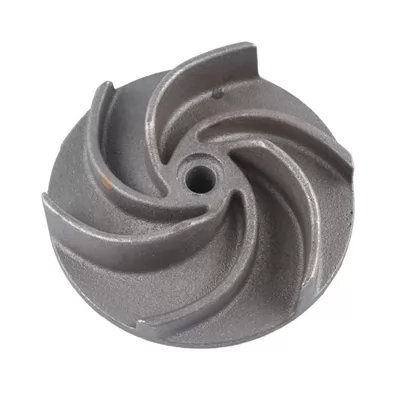
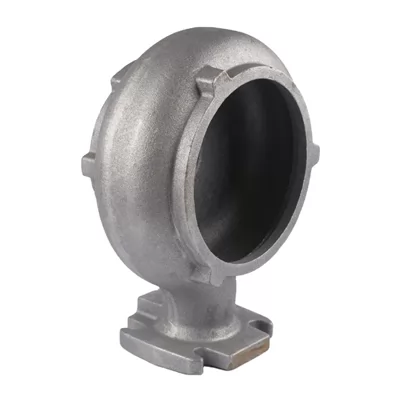
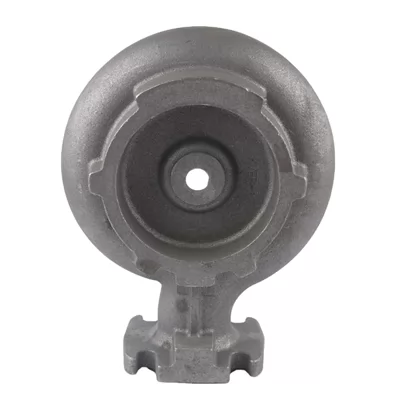
The pump casting products we have made include: cast pump body, pump casing, impeller castings and pump mounting brackets. All of our products are tailored to your specific needs. Besser's expertise covers the manufacture of pump castings for a variety of industries, including oil fields, petroleum production, refining, petrochemicals, water treatment, solid waste disposal and concrete construction.
We cater to your unique requirements with a range of metal materials, from heat-resistant stainless steel to cast iron, gray cast iron and various alloy steels. Rest assured, our dedicated quality control team and cutting-edge spectrometer technology ensure the highest precision in alloy composition.
Ready to take your projects to the next level? Contact us today to discuss your needs and find the perfect solution. Send us an email to start a conversation!
Your Trusted Pump Casting Manufacturer
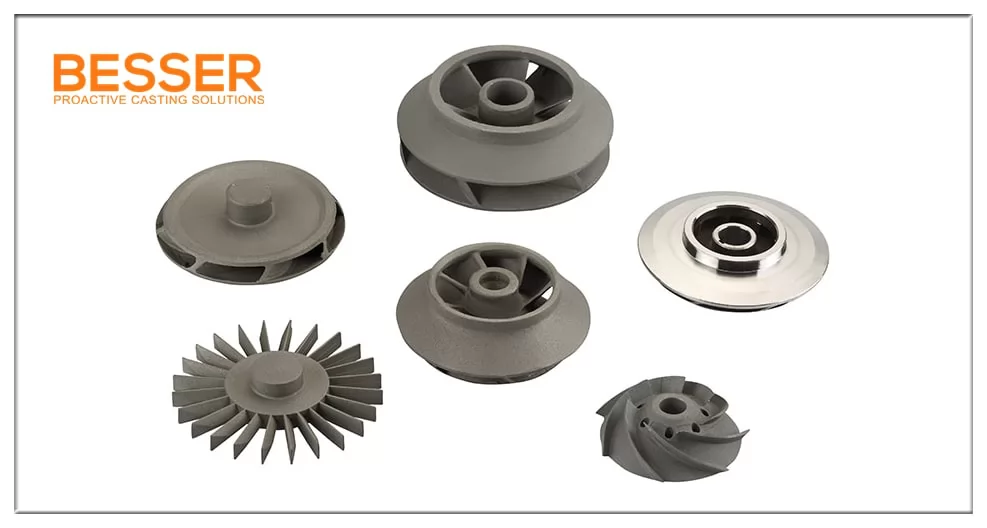
BESSER is one of the first-class pump casting manufacturers in China, we have our own pump casting factory and processing factory. Our pump casting experience and dedication to quality ensures that all pump parts are durable and reliable. Create good work performance and low cost for customers.
We have extensive experience in manufacturing high quality pump castings and pump component castings for different industries. Pumps are used in a wide variety of applications, so it goes without saying that pump castings are also used in a wide variety of applications. There are many kinds of pumps in the world, including process pumps, screw pumps, rotor pumps, gear pumps, submersible pumps, rotary pumps, centrifugal pumps, diaphragm pumps, etc. We have the right manufacturing equipment to manufacture pump castings.
No matter what pump casting you need, our engineers can customize it to your specifications. For pump parts casting questions and pricing, email erica@bessercasting.com today.